 Contact Us
 Appointment

Book An Appointment
Get in touch with our jewellery experts for virtual consultation
What is the Best Alternative to Diamonds? 6 Possible Options You Can Choose

 Share on Facebook
 Share on LinkedIn
 Share on watsapp
Diamonds have long been the symbol of luxury, commitment, and timeless jewellery. But today’s buyers are asking a different question: Is there a better or more practical alternative to diamonds?
The answer is yes. A growing number of gemstones now offer the same elegance and brilliance at a more accessible price. Whether you are searching for engagement rings, everyday jewellery, or even an astrological substitute, there are several stones worth considering.
Many people simply want stones that look like diamonds but are cheaper. Others prefer sustainable options like laboratory-grown diamonds or high-brilliance alternatives such as moissanite.
In this guide, we’ll walk through the most practical options buyers choose today and explain when each one actually makes sense.
Diamond vs Diamond Alternatives: Understanding the Difference
A diamond is a pure carbon gemstone with unmatched hardness and natural crystal structure. In contrast, diamond alternatives are stones or laboratory-created materials that offer a similar look at a lower price.
When buyers start exploring diamond alternatives for engagement rings or fine jewellery, one of the biggest questions is how different these stones actually are. The easiest way to understand this is to compare them by composition, durability, sparkle, and common use in jewellery.
The table below summarizes the practical differences a jeweller typically considers when recommending diamond substitutes.
This difference can help you determine what suits your requirements.
What Makes the Best Substitute for Diamond?
If you’re considering a diamond alternative, the key question is not just how the stone looks in the store, but how it performs after years of wear. The best substitute should deliver a similar visual appeal and remain practical for everyday jewellery.Diamond-like appearance1.Diamond-like appearance
Diamond-like appearance
Most buyers want stones that look like diamonds but are cheaper in price. With that, they prefer an elegant look. Usually, moissanite and laboratory-grown diamonds closely match the colorless brilliance of natural diamonds.
Durability for everyday jewellery
Rings and bracelets are exposed to frequent impact and friction. A strong substitute should have high hardness so it resists scratches and maintains its surface polish. For that reason, choose moissanite and white sapphire, suitable for daily wear.
Consistent sparkle and clarity
Some stones can appear cloudy or dull over time. A reliable diamond alternative should maintain its brilliance and transparency with normal use and occasional cleaning.
Availability in jewellery settings
The best alternatives are widely available in engagement rings, earrings, pendants, and fine jewellery, giving buyers flexibility in design choices.
Balanced value for the price
A good substitute offers a noticeable cost advantage compared to natural diamonds. There’s no need to invest $3000 for a 1-carat engagement ring or $10,000 for a wedding necklace. Within a $5000, you can purchase the entire wedding jewellery set with durability, beauty, and long-term wearability.
List of Diamond Substitutes to Choose from Beautiful Jewellery
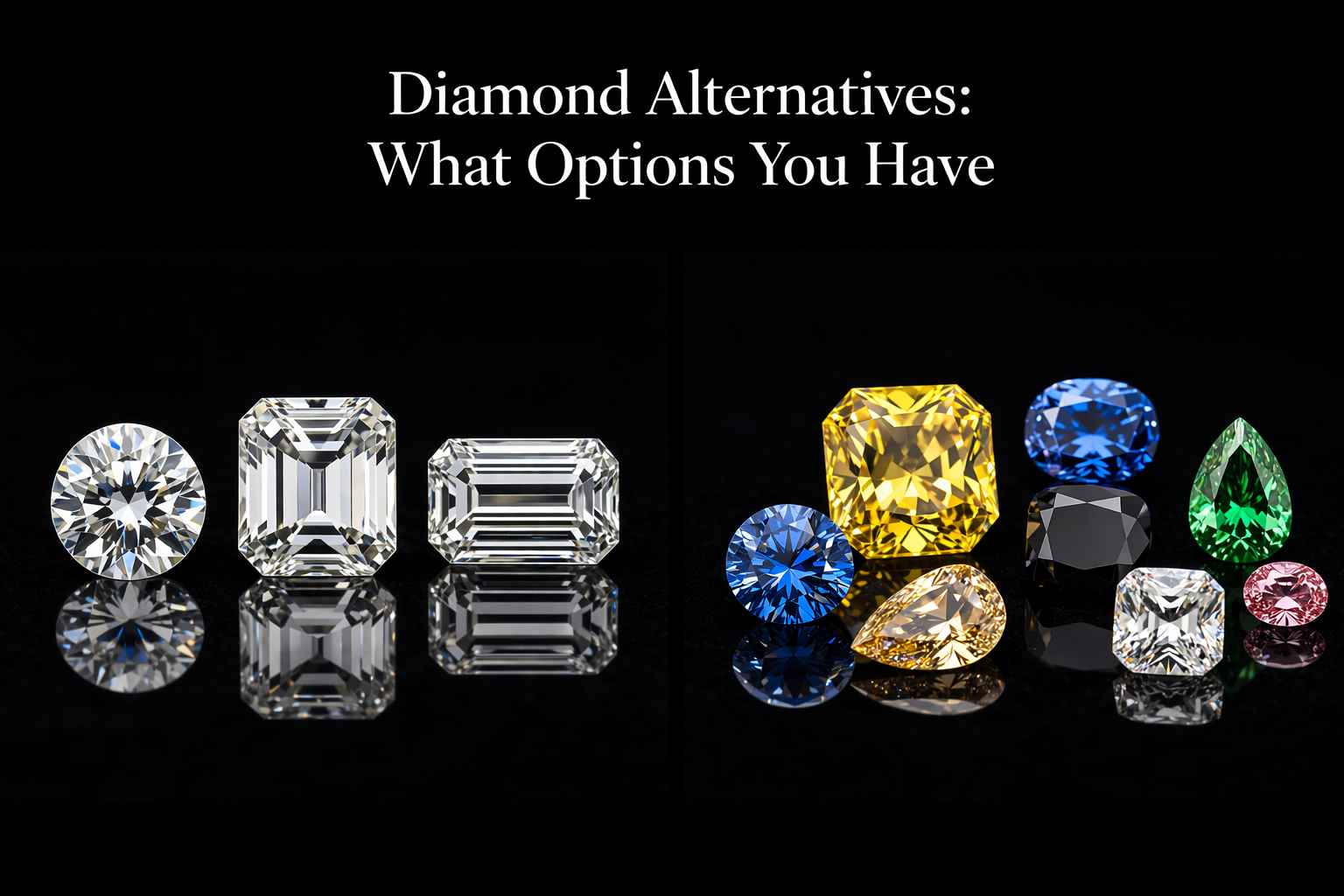
The most commonly considered options include laboratory-grown diamonds, moissanite, cubic zirconia, sapphire, white topaz, and morganite as diamond substitutes.
Laboratory-Grown Diamonds: The Closest Alternative
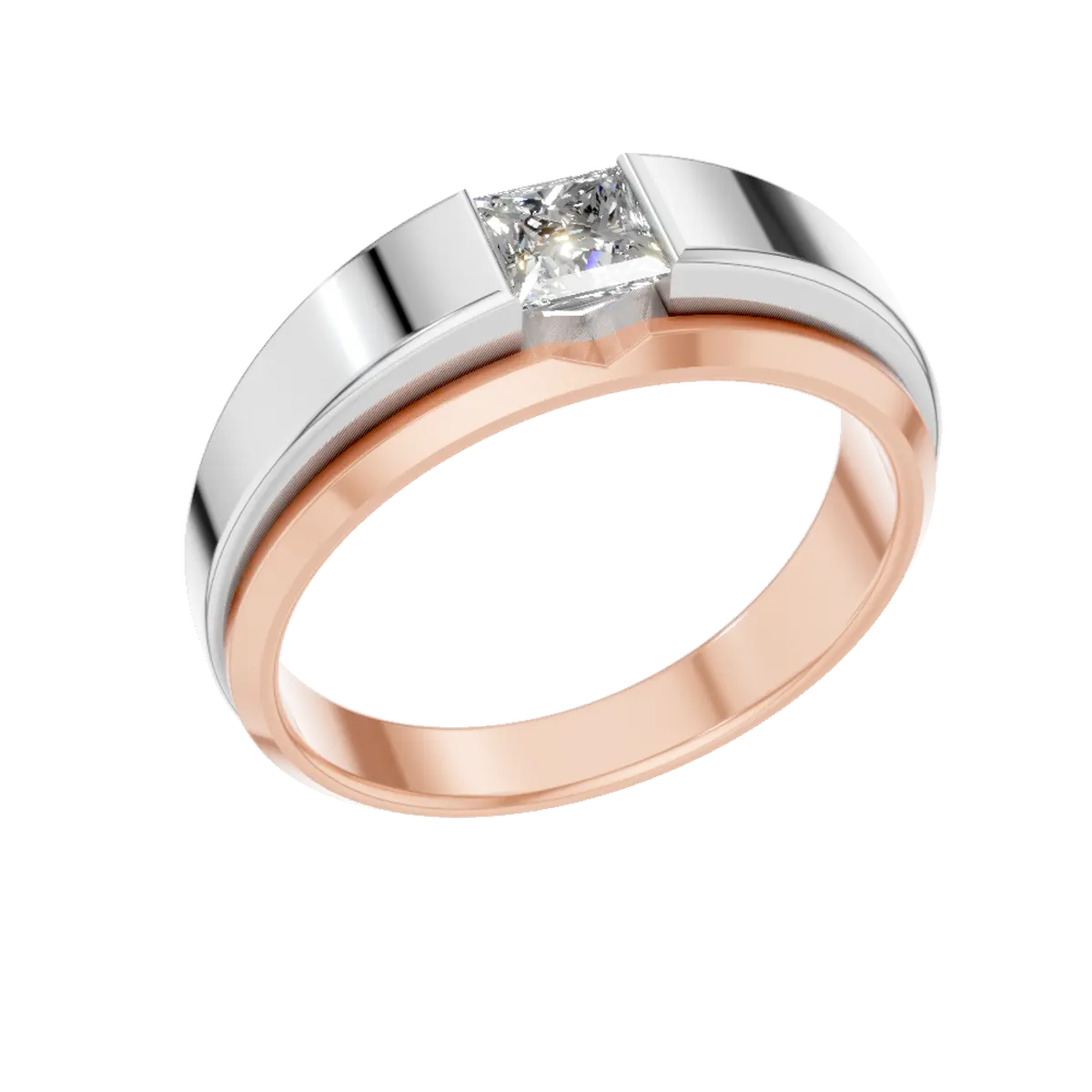
If you want the same qualities as a natural diamond but without the traditional price tag, laboratory-grown diamonds are the closest alternative available today. Unlike other substitutes that only imitate the look of diamonds, these are real stones created through modern technology.
What Are Laboratory-Grown Diamonds?
Laboratory-grown diamonds are produced in controlled environments where scientists recreate the pressure and temperature conditions that form diamonds in nature. Two commonly used methods are:
CVD (Chemical Vapor Deposition)
HPHT (High Pressure High Temperature)
These processes grow diamonds from a carbon seed, resulting in a gemstone with the same chemical composition, hardness (10 Mohs), and optical brilliance as natural diamonds.
Pros of laboratory-created diamonds
Identical durability and brilliance to natural diamonds
Significantly lower price compared to mined diamonds
Ethical sourcing without mining
Larger stones available for the same budget
Because of these benefits, these stones are widely used in engagement rings and contemporary fine jewellery.
Cons of laboratory-created diamonds
Lower resale value compared to natural diamonds
Some buyers still prefer traditionally mined diamonds for rarity
Best jewellery use for laboratory-created diamonds
Laboratory-grown diamonds are commonly used for:
Engagement rings
Wedding bands
Fine jewellery collections
Among all diamond alternatives, laboratory-grown diamonds remain the closest option to owning a traditional diamond while offering better value.
Moissanite: The Brightest Diamond Alternative
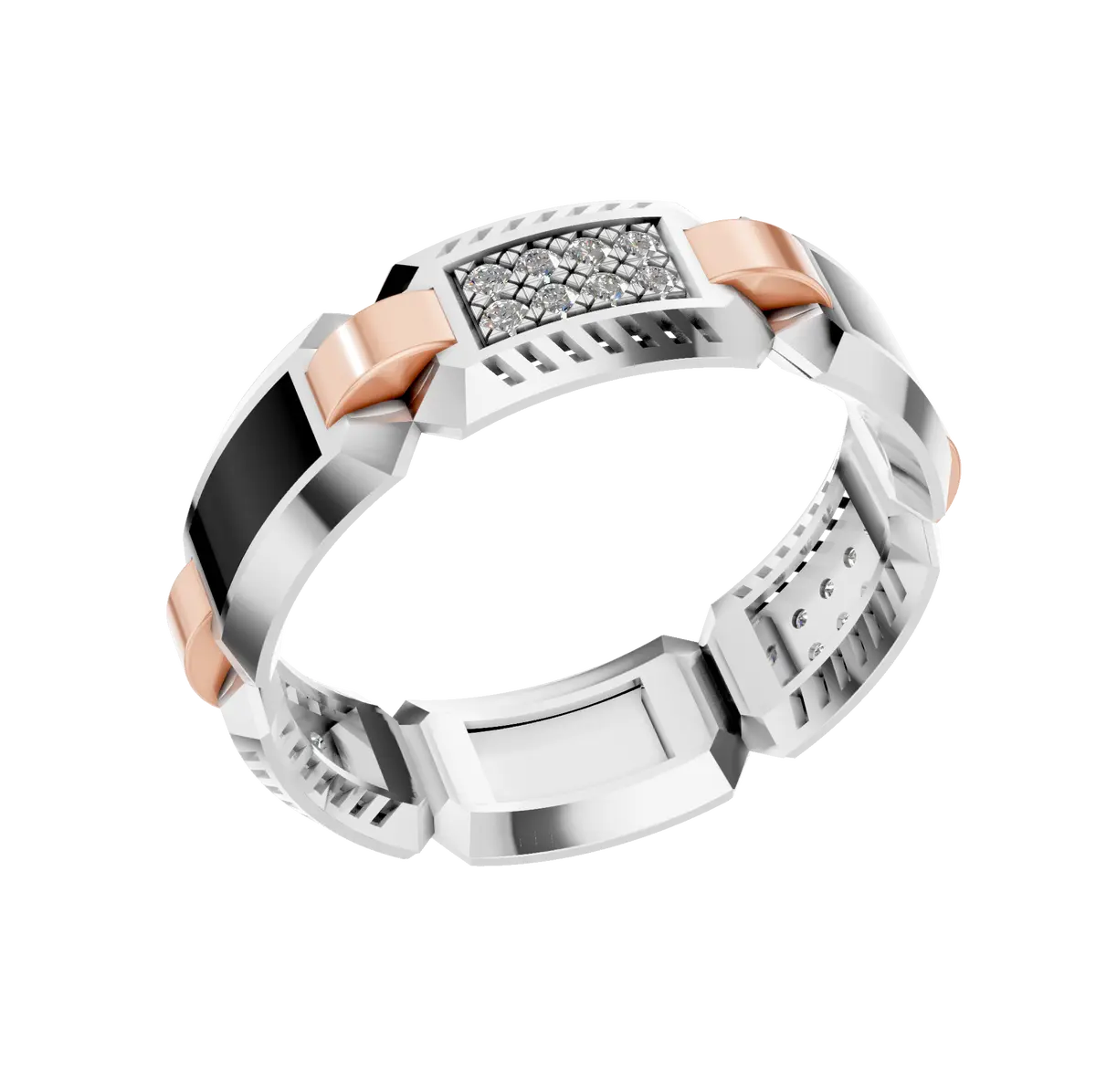
Among all diamond substitutes, moissanite is chosen by buyers who want maximum sparkle at an affordable price. It visually resembles a diamond but has its own optical characteristics that make it stand out.
What is Moissanite?
Moissanite is a gemstone made from silicon carbide, originally discovered in a meteor crater by scientist Henri Moissan. Natural moissanite is extremely rare, so the stones used in jewellery today are laboratory-created for precision and clarity.
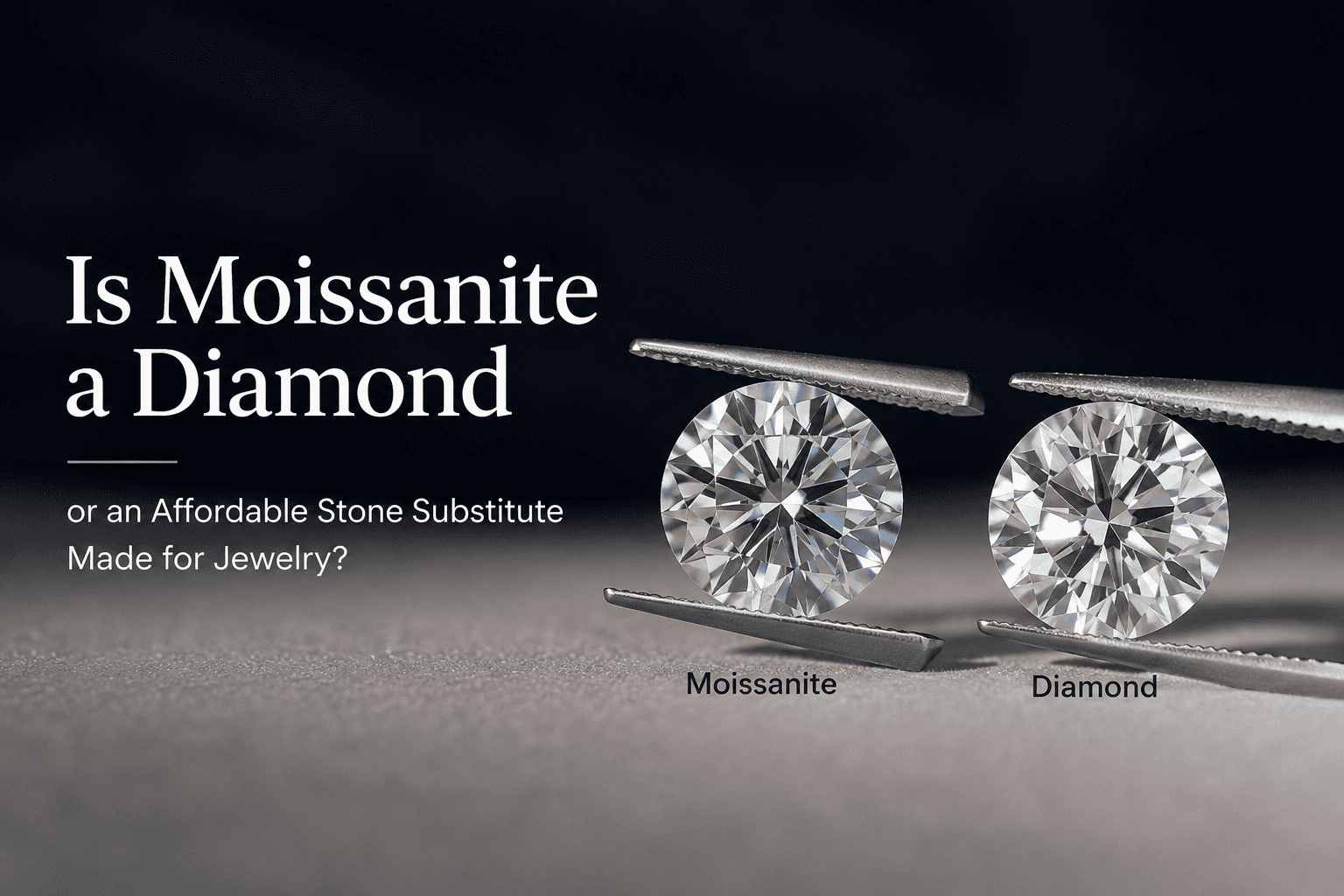
One interesting difference is how moissanite handles light. Its refractive index is higher than that of diamonds, which means it produces more fire and rainbow flashes under light.
Why Buyers Choose Moissanite?
It offers a diamond-like appearance with stronger brilliance and a more accessible price with authenticity certification. Key reasons include:
Exceptional sparkle compared to many other diamond alternatives
Strong durability with 9.25 hardness on the Mohs scale
Availability in large carat sizes at affordable prices
Pros of moissanite
It’s extremely brilliant sparkle.
It’s very durable for everyday jewellery.
It’s more affordable than natural diamonds.
The ethical and conflict-free production makes it a choice.
Cons of moissanite
Rainbow flashes can look different from diamond sparkle.
Some buyers may notice visual differences under strong lighting.
Best Jewellery Use for Moissanite
Moissanite is commonly used in:
Engagement rings
Wedding rings
Stud earrings
Solitaire pendants
For buyers searching for stones that look like diamonds but are cheaper, moissanite remains one of the most practical and visually perfect alternatives.
Cubic Zirconia: The Most Budget-Friendly Diamond Substitute
This is the option most people encounter first when searching for stones that look like diamonds but are cheaper. It is widely used in fashion jewellery because it provides a bright, diamond-like appearance at a very low cost.
What is Cubic Zirconia?
Cubic zirconia is a synthetic gemstone made from zirconium dioxide. Unlike natural gemstones, it is manufactured in laboratories specifically for jewellery use. One interesting characteristic is its high clarity. Most CZ stones appear flawless to the naked eye, which gives them a clean and sharp look when newly set.
However, cubic zirconia is denser than diamonds, meaning a CZ stone of the same size weighs slightly more, something jewellers often use to identify it.
Why Buyers Choose Cubic Zirconia?
Cubic zirconia is typically chosen when buyers prioritize appearance and affordability over long-term durability. Common reasons include:
It’s extremely affordable compared to diamonds
It can be easily available in large sizes.
Popular for travel jewellery or occasional wear
Used in many fashion jewellery designs
Pros of Cubic Zirconia
This stone is a very affordable diamond substitute.
High clarity and bright initial sparkle can reflect.
Easily available in different shapes and sizes from round to square and .50 to 10-carat weights.
Ideal for experimenting with jewellery styles
Cons of Cubic Zirconia
It is softer than diamonds and moissanite, so it scratches more easily.
The sparkle can become dull over time with wear
It’s less suitable for long-term engagement rings.
Best Jewellery Use for Moissanite
Cubic zirconia works best in jewellery pieces such as:
Fashion rings
Earrings
Statement pendants
Travel jewellery
For buyers exploring diamond alternatives purely for style and affordability, cubic zirconia remains one of the most accessible choices in modern jewellery.
Sapphire: A Natural Diamond Alternative with Lasting Durability
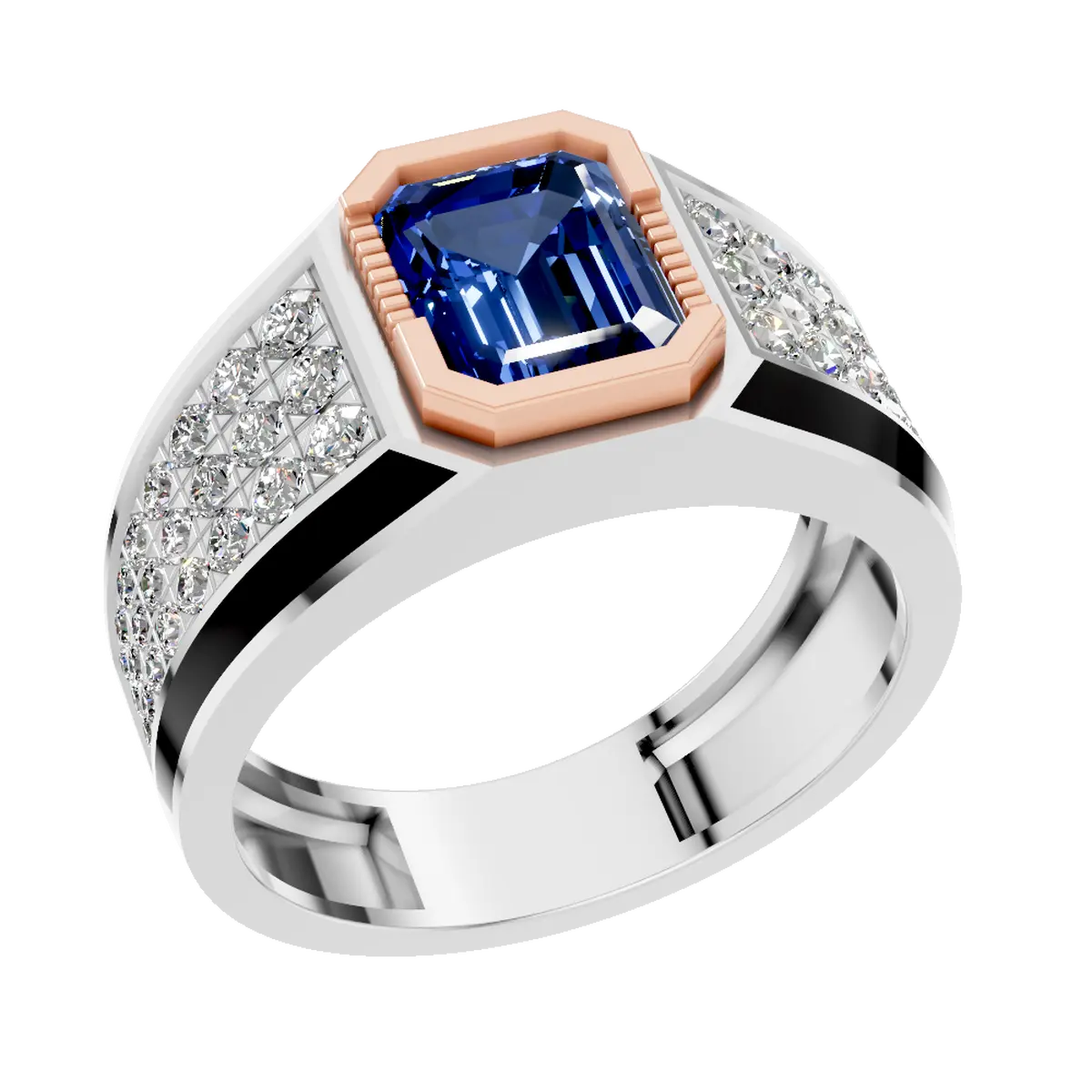
For buyers who prefer a natural gemstone rather than a laboratory-created simulant, white sapphire appears as a serious diamond alternative. It belongs to the corundum mineral family, the same group that produces blue sapphires and rubies. It makes it one of the hardest natural gemstones used in jewellery.
What is Sapphire?
Usually, a white sapphire is a colorless variety of corundum. Blue sapphire is also a good choice as a birthstone for jewelry. Unlike diamonds or moissanite that emphasize intense sparkle, white sapphire offers a clean, glass-like brilliance that many buyers appreciate for its understated elegance.
Another advantage is durability. With a hardness of 9 on the Mohs scale, it is one of the few gemstones strong enough for everyday rings.
Pros of Sapphire
Natural gemstone with strong durability
Good resistance to scratches
Elegant, understated appearance
Suitable for long-term jewellery wear
Cons of Sapphire
Less brilliance compared to diamonds or moissanite
May require regular cleaning to maintain clarity
Best Jewellery Use for sapphire
Sapphire is commonly used in:
Engagement rings
Vintage-style jewellery
Halo ring settings
Elegant pendants
Sapphire is usually chosen for astrological jewellery due to its own characteristics, like helping in tough times and giving direction on what to do next.
White Topaz: A Practical Entry-Level Diamond Alternative
Not every buyer looking for a diamond substitute wants maximum sparkle or a high-end gemstone. Some simply want a clean, colorless stone that keeps jewellery elegant without increasing the price significantly. This is where white topaz becomes relevant—it fills the gap between fashion jewellery and premium alternatives.
What is White Topaz?
White topaz is a naturally occurring gemstone known for its transparent, icy appearance. Unlike diamonds or moissanite that emphasize intense light dispersion, white topaz reflects light in a softer, more understated way. Because of this, it is often used in jewellery designs where the metalwork and overall design are meant to stand out rather than the stone itself.
Pros of White Topaz
Natural gemstone with a bright, clear appearance
Allows larger stones at affordable prices
Works well in contemporary jewellery designs
Easily available in multiple shapes and cuts
Cons of White Topaz
Softer surface compared to diamonds, moissanite, or sapphire
Sparkle is more subtle and less fiery.
Not the best choice for heavily worn rings
Best Jewellery Use for White Topaz
White topaz is most commonly used in:
Lightweight rings
Stackable jewellery
Drop earrings
Pendant necklaces
For buyers who prioritize clean aesthetics and affordability, white topaz provides a straightforward alternative without the complexity or price of more premium diamond substitutes.
Morganite: A Stylish Alternative for Modern Engagement Rings
A gemstone that offers its own identity while still feeling elegant and suitable for engagement jewellery. This is where morganite stands out. Its soft peach-pink color has made it one of the most recognizable alternatives in modern bridal jewellery.
What is Morganite?
Morganite belongs to the beryl mineral family, the same group that includes emerald and aquamarine. Its delicate blush color comes from traces of manganese within the crystal. When cut well, morganite shows a warm glow rather than the sharp sparkle associated with diamonds, giving jewellery a softer and more romantic character.
Over the last decade, morganite has become popular in engagement rings because it pairs beautifully with rose gold settings, creating a distinctive vintage-inspired look.
Pros of Morganite
Unique color that differentiates it from diamond-like stones
Elegant appearance in vintage and halo ring designs
Allows larger stones at a relatively accessible price
Increasing popularity of engagement jewellery
Cons of Morganite
Softer than diamonds and moissanite, requiring careful wear
Light color may show surface scratches over time.
Sparkle is more subtle compared to diamond alternatives
Best Jewellery Use for Morganite
Morganite is most commonly used in:
Engagement rings
Vintage-style halo rings
Statement rings
Bridal jewellery sets
For buyers who want something distinctive rather than a traditional diamond look, morganite offers a romantic and modern alternative that brings its own personality to jewellery design.
Which Diamond Alternatives Are Best for Engagement Rings?
When choosing diamond alternatives for engagement rings, buyers usually look beyond the stone itself. People also compare ring styles, carat size, and metal choices such as 14K gold, 18K gold, white gold, or rose gold. Below is how each alternative works in real engagement ring settings.
Laboratory-Grown Diamonds
Laboratory-grown diamonds are ideal for classic solitaire engagement rings, hidden halo rings, and pavé rings. Buyers choose 1 carat, 1.5 carat, or 2 carat rings set in 14K white gold or 18K yellow gold because they offer a traditional diamond look with better value.
Moissanite
Moissanite performs well in halo engagement rings, oval solitaire rings, and cushion-cut engagement rings. Popular searches include 2-carat moissanite rings set in 14K rose gold or white gold, offering strong brilliance and a large center stone appearance.
Cubic Zirconia
Cubic zirconia is commonly used in travel engagement rings or temporary bridal rings. Many buyers choose princess cut or round cut CZ rings in sterling silver or 14K gold-plated settings for affordability.
White Sapphire
White sapphire works beautifully in vintage rings, three-stone rings, and bezel settings. Buyers select 1-carat sapphire rings in 18K yellow gold for a refined, natural gemstone look.
White Topaz
White topaz is typically used in delicate engagement rings, stackable rings, and minimalist solitaire designs. It is paired with 14K white gold or silver settings for lightweight everyday jewellery.
Morganite
Morganite engagement rings are popular in oval halo rings, cushion cut rings, and vintage-inspired designs. Many buyers choose 2-carat Morganite rings set in 14K or 18K rose gold, which enhances the stone’s soft peach color and romantic appearance.
Platizem: A Beautiful and Affordable Laboratory-grown Diamond and Moissanite Jewellery Store
If you are considering modern diamond alternatives, choosing the right jewellery store matters just as much as choosing the stone.
Platizem is a jewelry brand focused on elegant, accessible designs made with laboratory-grown diamonds and moissanite.
We offer a range of beautifully crafted pieces, including:
Engagement rings
Wedding bands
Earrings
Pendants
Fine jewellery collections
What makes Platizem appealing is its balance of design quality, affordability, and ethical sourcing.
Instead of paying premium prices for mined diamonds, buyers can explore laboratory-grown diamond rings and moissanite rings that deliver exceptional brilliance and craftsmanship.
For couples looking for modern engagement rings that combine beauty, value, and sustainability, Platizem provides a thoughtful alternative.
See the following collection:
Final Verdict
Choose a diamond alternative when you want to get the same appearance on your personality with the affordable price, good quality, and a more ethical choice. You can buy diamond substitute jewellery for your loved ones as well, and there are many options available. The authenticity of these stones can be verified with the certification report.
FAQ
Is moissanite better than a diamond?
Moissanite is more affordable and sparkles more, but diamonds remain harder and are traditionally valued for rarity and long-term prestige.
Do moissanite rings look fake?
No. High-quality moissanite rings closely resemble diamonds, though their stronger rainbow sparkle can sometimes reveal they are different gemstones.
What stone is closest to a real diamond?
Laboratory-grown diamonds are closest to real diamonds because they share identical chemical composition, hardness, and brilliance as natural diamonds.
Can people tell the difference between moissanite and diamonds?
Most people cannot tell the difference visually, but under strong lighting, moissanite shows rainbow flashes that diamonds typically do not display.
Are diamond alternatives certified?
Yes. As laboratory-grown diamonds come with the IGI and GIA certification reports, and other substitutes like Moissanite, Sapphire, and Topaz also come with recognizable certification.

89/A/B1 sy.no.:0432 Opposite Zenitex Mill, Vastadevdi Road, Katargam, Surat-395004