 Contact Us
 Appointment

Book An Appointment
Get in touch with our jewellery experts for virtual consultation
Moissanite a Diamond or an Affordable Stone Substitute Made for Jewelry

 Share on Facebook
 Share on LinkedIn
 Share on watsapp
When shopping for an engagement ring or fine jewelry, many buyers assume moissanite is simply a fake diamond. That assumption is one of the biggest reasons people hesitate before buying it. The reality is more nuanced.
They think it’s an alternative to a diamond, like natural and lab-grown.
Basically, the Moissanite is not a diamond, but it is not cheap costume jewelry either. It is a real gemstone with its own optical properties, durability, brilliance, and growing place in modern fine jewelry.
In fact, many American buyers today intentionally choose moissanite over diamonds because they want larger stones, ethical sourcing, lower pricing, and everyday practicality without sacrificing appearance.
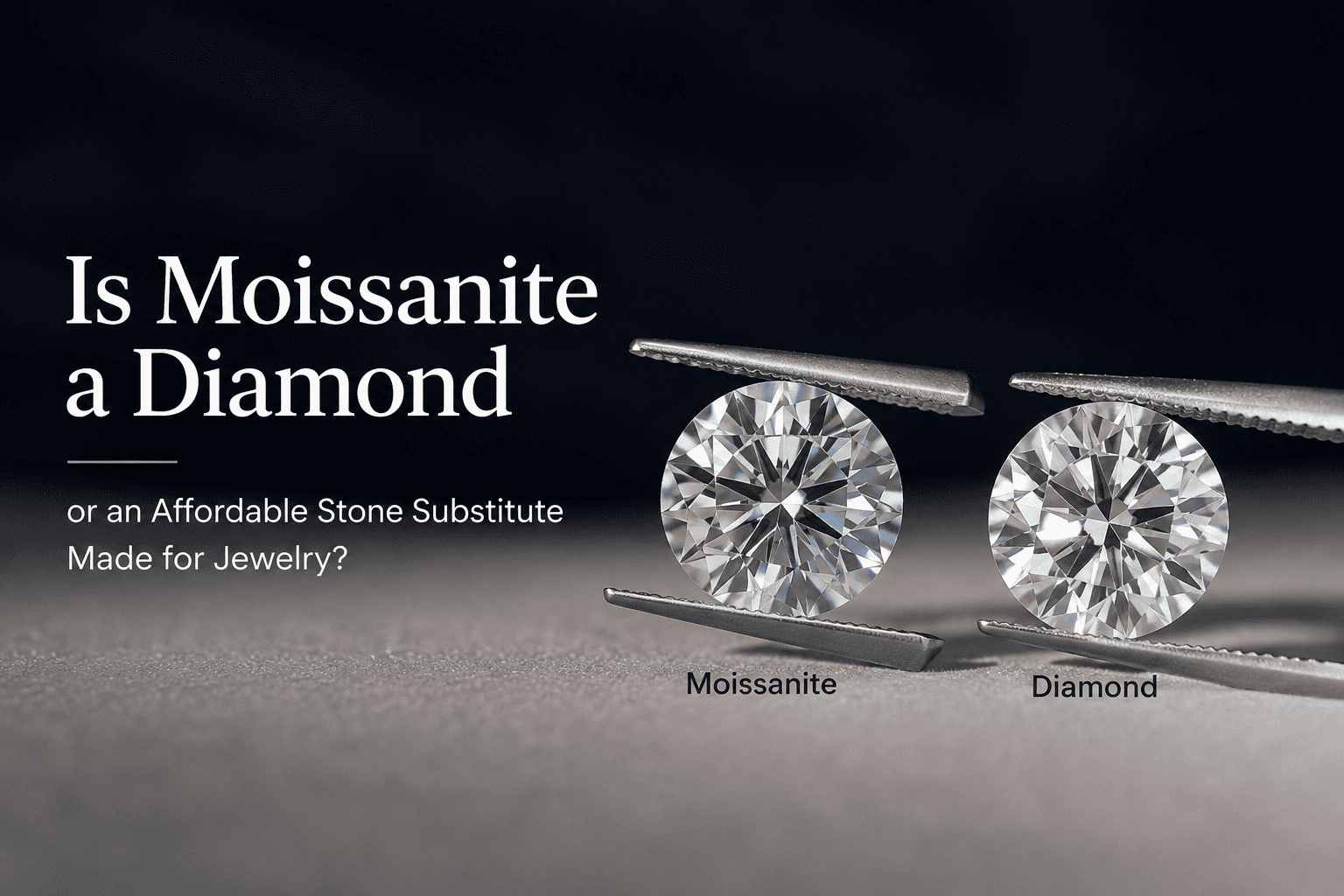
The confusion usually begins when shoppers compare moissanite side-by-side with diamonds online. At first glance, they can look almost identical. Yet they behave differently under light, have different origins, and appeal to different priorities.
If you are trying to decide whether moissanite is worth buying, whether it looks real, or whether it is simply a diamond alternative created to cut costs, this guide explains everything clearly.
For buyers exploring modern moissanite engagement rings, earrings, pendants, necklaces, and everyday jewelry, Platizem has become popular among shoppers looking for premium-looking jewelry without traditional diamond pricing.
What Exactly Is Moissanite?
Moissanite is a gemstone made from silicon carbide. It was originally discovered in 1893 by French scientist Henri Moissan while studying meteor fragments from a crater in Arizona.
At first, the tiny crystals were mistaken for diamonds because of their brilliance. Later, scientists identified them as having an entirely different mineral composition.

Is moissanite available naturally? Yes, but it’s extremely rare, which means the stones used in jewelry today are laboratory-created. That often creates confusion among buyers because “lab-created� is commonly associated with imitation stones. However, lab-grown moissanite is still a genuine gemstone with consistent chemical and physical properties.
Unlike cubic zirconia, glass stones, or plastic imitations, moissanite was developed specifically for fine jewelry durability and optical performance.
Today, it is widely used in:
Engagement rings
Wedding bands
Tennis bracelets
Pendants
Is Moissanite a Real Diamond?
No. Moissanite is not a 100% diamond.
Diamonds are made from carbon. Moissanite is made from silicon carbide. They are two completely different gemstones. There’s no debate around moissanite vs diamond.
However, moissanite is considered one of the closest visual alternatives to diamonds available in the jewelry industry.
Most people cannot immediately tell the difference between a high-quality moissanite stone and a diamond during casual viewing. The distinction becomes more visible under certain lighting conditions or when examined by professionals using gemological tools.
That similarity is exactly why moissanite has become one of the fastest-growing alternatives in engagement jewelry.
Why Buyers Confuse Moissanite With Diamonds
The confusion happens because moissanite shares several visual characteristics with diamonds:
Moissanite gems have high brilliance
Strong sparkle in this stone make its interesting
Clear appearance in the stone used to reflect the light
Similar color grades to the 4Cs of diamonds
Luxury jewelry settings
Hardness suitable for daily wear
From a distance, many rings appear nearly identical.
But moissanite reflects light differently. It produces more rainbow-colored flashes compared to the white brilliance typically associated with diamonds.
Some buyers love this effect because it looks vibrant and eye-catching. Others prefer the subtler sparkle of natural diamonds.
This difference in sparkle is often the easiest way jewelers identify moissanite without magnification.
Does Moissanite Look Fake in Real Life?
One of the biggest concerns US buyers have is whether moissanite looks obviously fake.
In reality, high-quality moissanite does not usually appear fake to the average person.
Most people do not inspect jewelry closely enough to distinguish between premium moissanite and diamonds. What they notice first is:
Ring design
Stone size
Sparkle
Metal quality
Overall craftsmanship
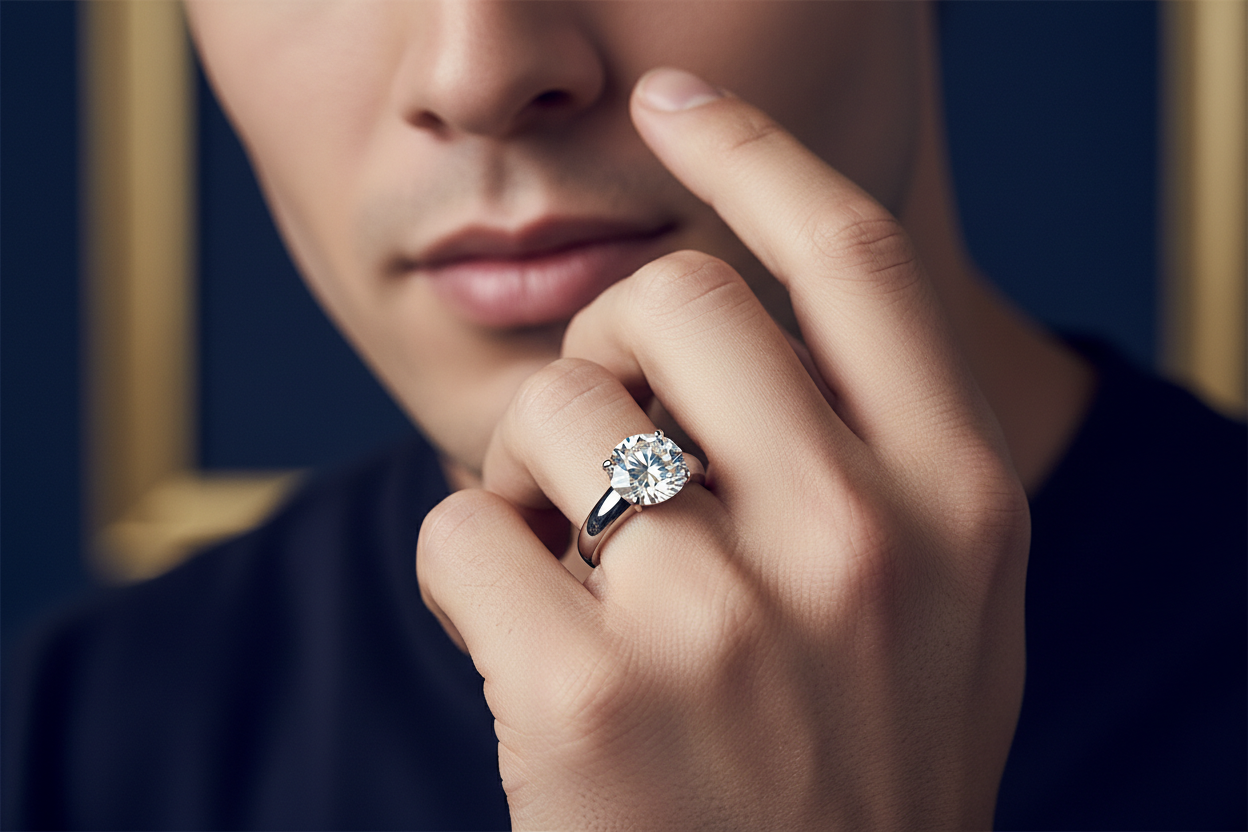
A well-designed moissanite ring in solid gold or platinum often appears luxurious and expensive.
Where moissanite sometimes reveals itself is under bright sunlight or jewelry-store lighting. Because it has higher refractive properties than diamonds, the rainbow flashes can appear more intense.
Some buyers specifically want that fiery sparkle. Others prefer a more understated diamond-like appearance and choose premium cuts designed to minimize excessive fire.
The quality of the setting also matters significantly. Cheap settings can make even diamonds look unimpressive, while premium craftsmanship elevates moissanite dramatically.
This is why buyers increasingly focus on overall jewelry design rather than the gemstone alone when purchasing engagement rings.
Moissanite vs Diamond: What Is the Real Difference?
There are some factors to know that help to understand moissanite vs diamond.
1. Composition
When talking about the diamond, carbon is the main component that adds durability. Other side, a Moissanite is originally made with Silicon Carbide. They are chemically different stones.
2. Sparkle
Moissanite reflects more rainbow fire. That’s why women’s earrings are designed for daily wear with this stone. Referring to the diamonds usually produce a more balanced white sparkle.
3. Hardness
On the Mohs hardness scale, diamond has a 10 score, and the Moissanite scored 9.25. That makes moissanite extremely durable for daily wear.
4. Price
This is where moissanite changes the buying equation entirely.
A moissanite stone can cost less than a comparable diamond while still delivering a large, premium appearance.
A 1-carat round moissanite loose stone costs $20-120 with a high-grade certificate. The natural diamond at the same weight costs start from $1000. A lab-grown diamond of 1 carat remains 40% less costly than a natural diamond.
For many couples, that price difference allows them to buy larger center stones like 1-carat to 3-carat. Then, upgrade ring settings from simple to custom ring while staying within budget and avoiding financing debt. They can invest money elsewhere.
5. Rarity
Natural diamonds formed underground over billions of years. They are rare, and it’s a fact.
Moissanite used in jewelry is lab-created.
For some buyers, rarity and natural origin matter emotionally. For others, appearance and value matter more.
Why Many US Couples Are Choosing Moissanite Instead of Diamonds
The shift toward moissanite is not only about saving money.
Modern buyers are changing how they think about engagement jewelry.

Budget Flexibility
Many couples today prioritize experiences, homes, travel, or financial stability over spending tens of thousands on a ring.
Moissanite allows buyers to achieve a luxury look without extreme pricing.
Larger Stone Appearance
Buyers who want a bigger center stone often realize that moissanite offers better visual size within budget. Instead of compromising on appearance, they can choose:
Larger carat-equivalent stones
Hidden halo designs
Vintage-inspired rings
Multi-stone styles
Ethical Concerns
Some shoppers are uncomfortable with concerns historically associated with diamond mining. Lab-created moissanite appeals to buyers looking for more transparent sourcing.
Daily Practicality
Many people want jewelry they can wear confidently every day without constantly worrying about damaging or losing an extremely expensive diamond.
Moissanite offers durability while reducing financial anxiety.
Is Moissanite Good for Engagement Rings?
Yes. Moissanite is considered highly suitable for engagement rings.
Its hardness rating makes it durable enough for long-term everyday wear, which is essential for rings exposed to frequent impact and friction.
Popular engagement ring styles include:
Oval moissanite rings
Hidden halo settings
Cushion-cut designs
Emerald-cut moissanite rings
Vintage-inspired settings
Because moissanite costs less than diamonds, buyers often invest more into ring craftsmanship, custom settings, and precious metals like platinum and 18kt white, rose, and yellow gold.
That creates jewelry that feels premium overall rather than simply focusing on the center stone.
Can Jewelers Tell the Difference Between Moissanite and Diamonds?
Yes, professional jewelers usually can.
Traditional diamond testers sometimes mistakenly identify moissanite as diamond because both conduct heat similarly. However, advanced testing equipment detects the difference.
Visually, experienced jewelers often identify moissanite through:
Rainbow fire patterns
Double refraction
Optical behavior under magnification
For casual social settings, though, most people will not know the difference unless told directly.
Is Moissanite Better Than Cubic Zirconia?
Absolutely.
This comparison matters because many buyers wrongly group moissanite and cubic zirconia together.
They are very different products.
Moissanite
These stones are a premium gemstone alternative
Moissanite is extremely durable
Long-lasting brilliance is the key aspect
Fine jewelry quality available
Suitable for daily wear with durability
Cubic Zirconia
These are lower-cost imitation stones
Less durable
CZ stones can become cloudy over time
These stones are scratched more easily
Often used in fashion jewelry
Moissanite sits in an entirely different quality category.
Does Moissanite Lose Its Sparkle Over Time?
No. Genuine moissanite stones do not permanently lose brilliance.
Because it is extremely hard and resistant to scratching, it maintains its sparkle for many years when cleaned properly.
Like all jewelry, dirt, lotion, soap residue, and oils can temporarily reduce shine. Regular cleaning restores its appearance.
Most owners clean moissanite using:
Warm water
Mild soap
Soft toothbrush
Jewelry cloth
Professional cleaning also helps maintain maximum brilliance.
Is Buying Moissanite Embarrassing or Cheap?
This concern is more emotional than technical.
Some buyers worry others will judge them for not purchasing a natural diamond. But consumer attitudes are changing rapidly, especially among younger American couples.
Today, many buyers openly choose moissanite intentionally because they value:
Financial responsibility
Modern sourcing
Practical spending
Visual beauty over status symbolism
Luxury no longer means spending the most money possible. For many people, luxury means buying intelligently while still achieving a premium aesthetic.
That mindset has made moissanite far more socially accepted than it was a decade ago.
Who Should Buy Moissanite?
Moissanite works especially well for buyers who:
Want a larger-looking engagement ring
Prefer budget flexibility
Love high sparkle
Want durable daily jewelry
Prefer lab-created stones
Care more about appearance than resale value
Want custom jewelry without diamond pricing
It may not be ideal for buyers whose primary goal is owning a natural, rare gemstone with long-term prestige value.
Best Moissanite Jewelry Styles Right Now
Current US jewelry trends show strong demand for:
Oval Moissanite Rings: They create an elongated finger appearance and maximize visual size. An average choice for a 1-carat oval mossanite ring becomes prominent.
Hidden Halo Settings: Popular among buyers wanting extra sparkle without an overwhelming design, with a touch of high-quality stones.
East-West Cuts: Modern horizontal stone settings have gained attention in minimalist jewelry for younger couples.
Moissanite Tennis Bracelets: Luxury-inspired everyday jewelry with accessible pricing, and with 14KT yellow or rose gold, it feels unique.
Vintage-Style Rings: Detailed craftsmanship combined with moissanite creates a strong visual impact on the personality.
For shoppers exploring these styles, collections from Platizem offer modern moissanite designs focused on premium aesthetics rather than mass-produced appearance.
Need a custom design ring? We also make it for you and you only. Ask for help from us, and we will bring what you want.
Is Moissanite Worth Buying in 2026?
For many buyers, yes.
The jewelry market has changed significantly over the last few years. Consumers now research more carefully before purchasing expensive jewelry, and many realize that emotional meaning comes more from the relationship than the geological origin of the stone.
Moissanite allows buyers to own visually stunning jewelry without the traditional financial pressure attached to diamond shopping.
The key is understanding what you personally value most:
Natural rarity
Brand prestige
Investment perception
Ethical sourcing
Large visual appearance
Budget-conscious luxury
Everyday practicality
There is no universally correct answer.
The best gemstone is the one that aligns with your priorities, lifestyle, and financial comfort.
Final Thoughts
Moissanite is not a diamond, but calling it “just a fake diamond� oversimplifies what it actually offers.
It is a durable, high-performance gemstone created for people who want brilliance, luxury appearance, and practical pricing in fine jewelry. That combination is exactly why moissanite has become one of the strongest alternatives in the modern engagement ring market.
For some buyers, natural diamonds will always hold emotional and symbolic importance. For others, moissanite represents a smarter and more flexible approach to jewelry ownership.
Neither choice is wrong.
What matters most is buying jewelry that feels meaningful, beautiful, and financially comfortable for your life.
If you are exploring premium moissanite engagement rings, earrings, bracelets, or custom jewelry styles, you can browse modern collections at Platizem.

89/A/B1 sy.no.:0432 Opposite Zenitex Mill, Vastadevdi Road, Katargam, Surat-395004